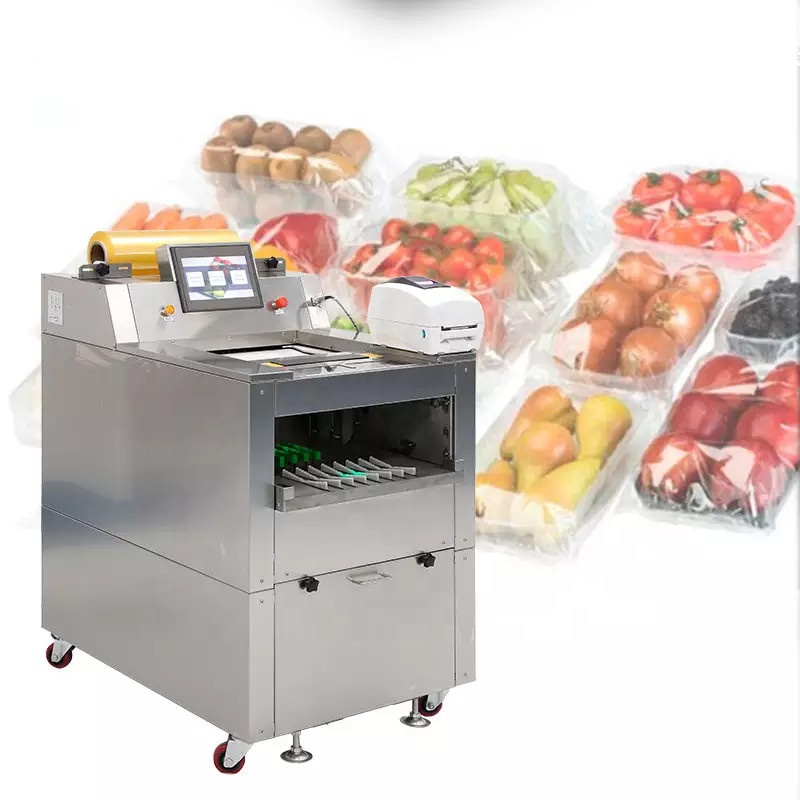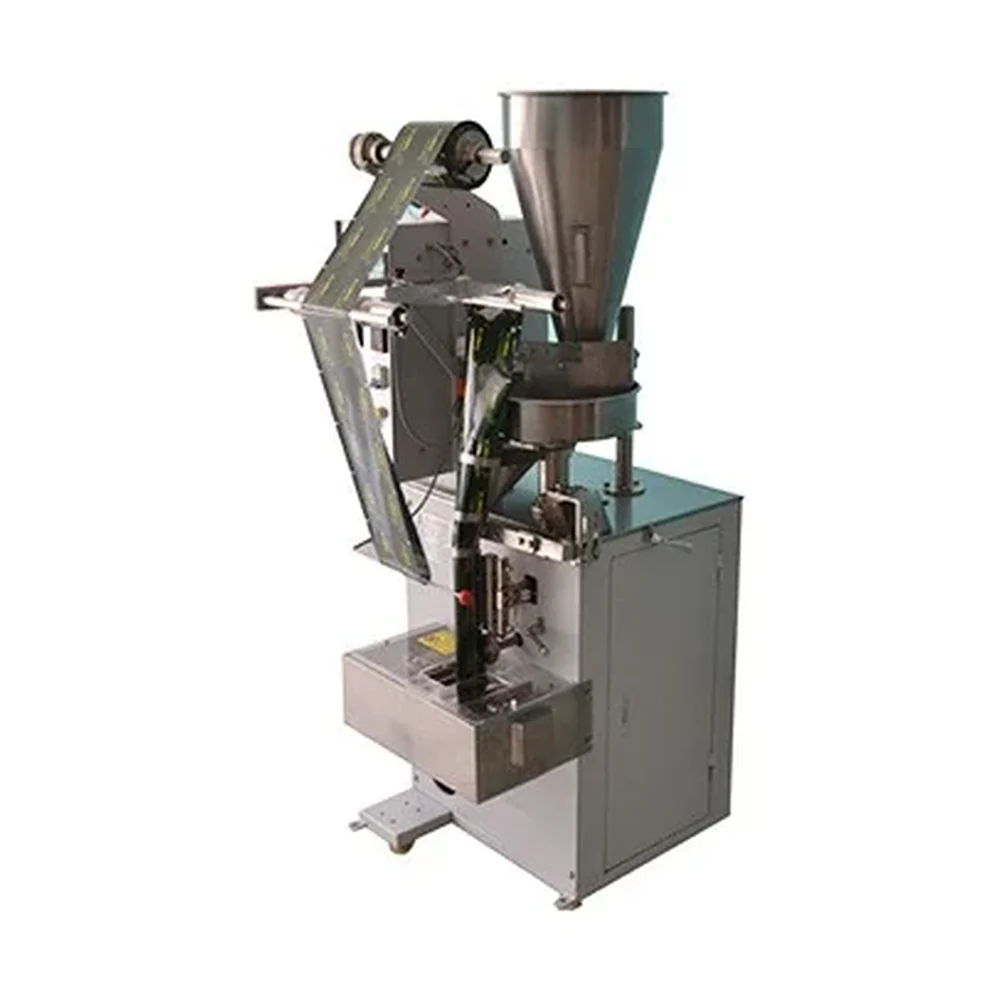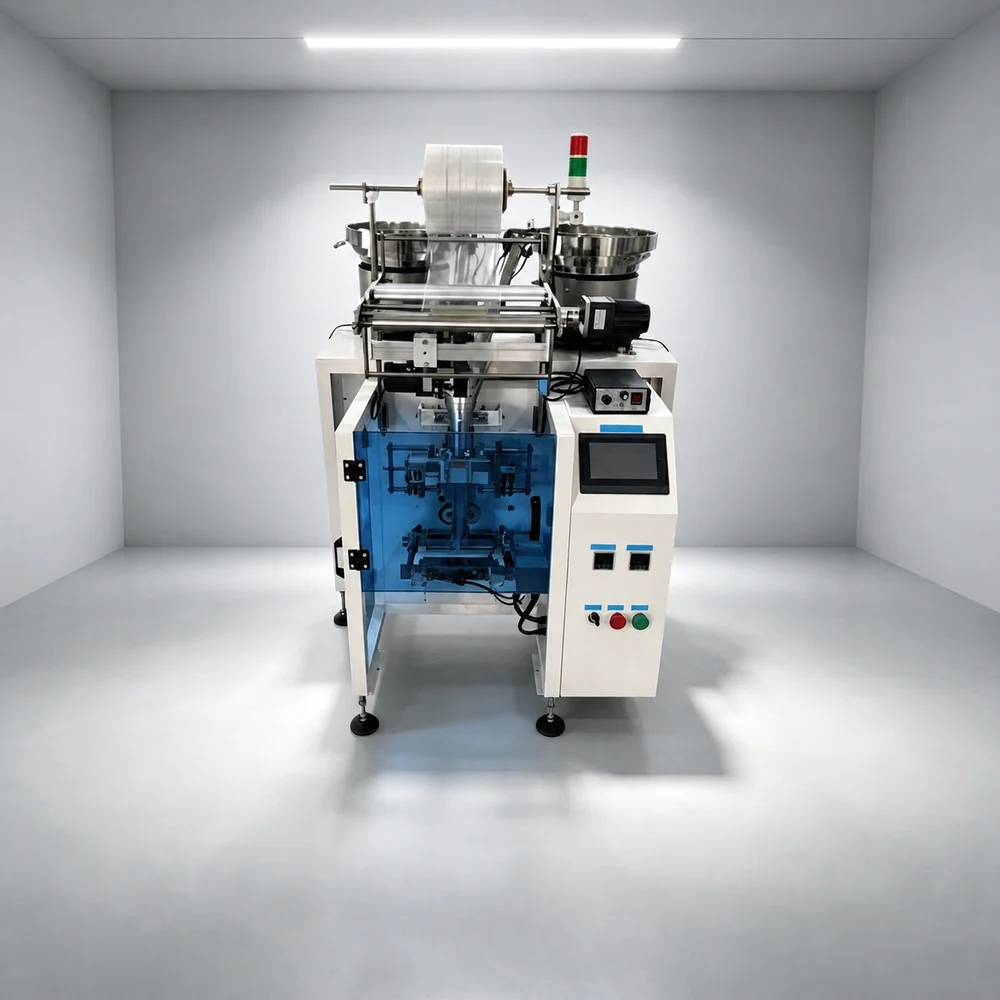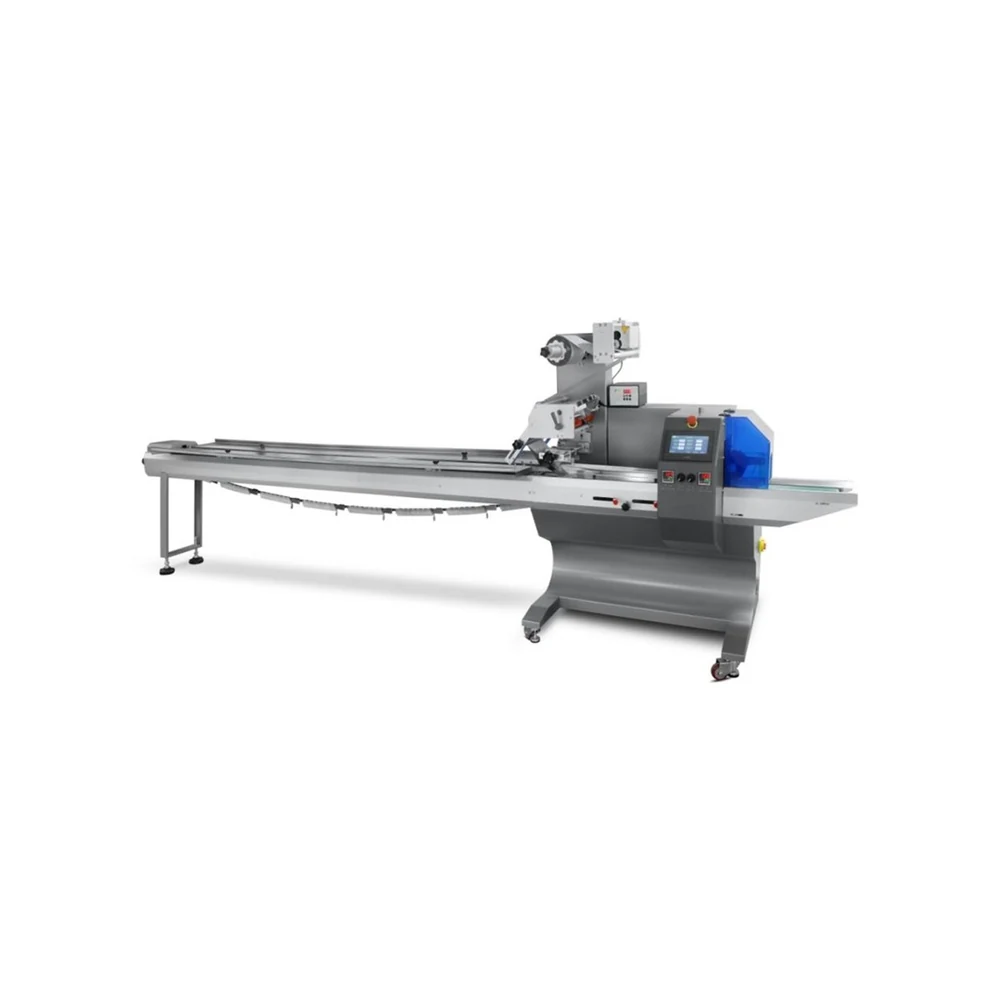


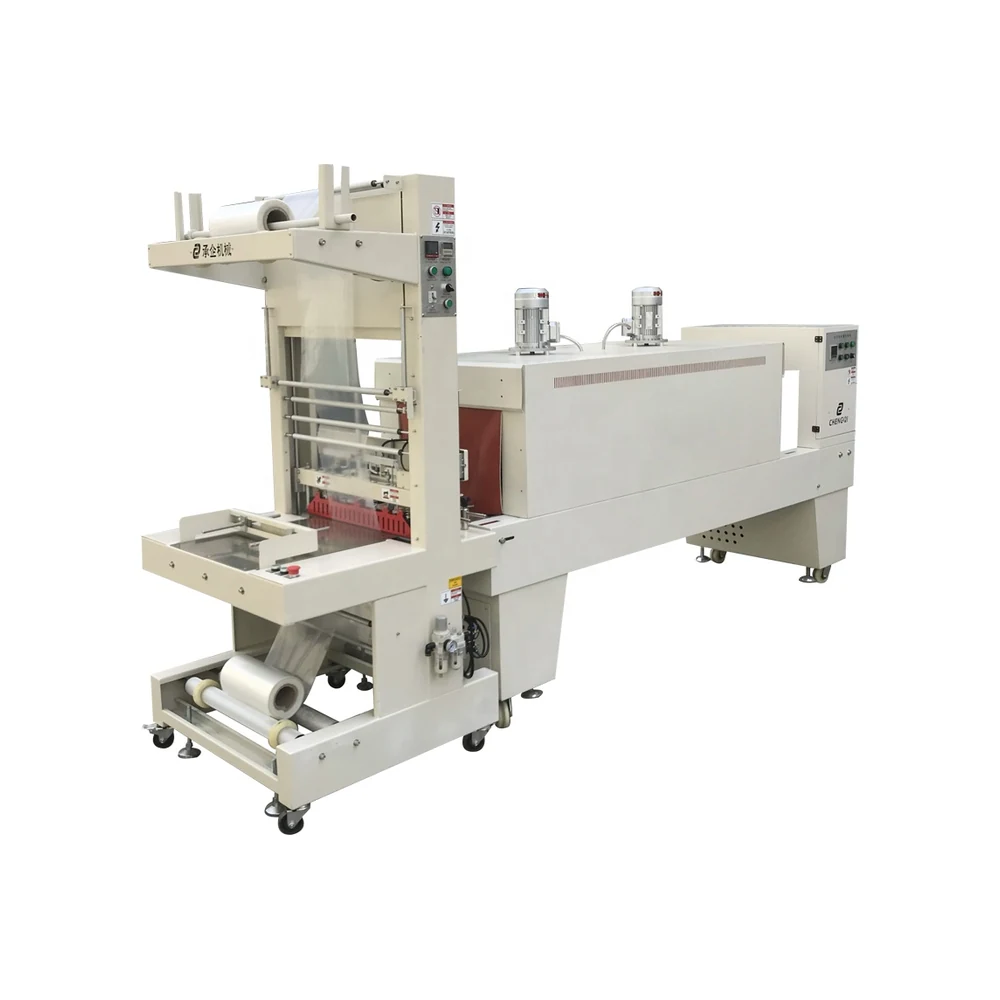
Horizontal Flow Wrappers for Food and Industrial Products
Horizontal Flow Wrapper Configurations and Product Options
This category has no child taxonomies. Top-film and bottom-film describe film-feed structures and machine configurations, not categories. The Horizontal Vacuum Packaging Machine remains an assigned product type and should target its specific horizontal vacuum packaging long-tail intent rather than the generic flow-wrapper head terms.
top-film flow wrapper for bakery products
bottom-film flow wrapper selection
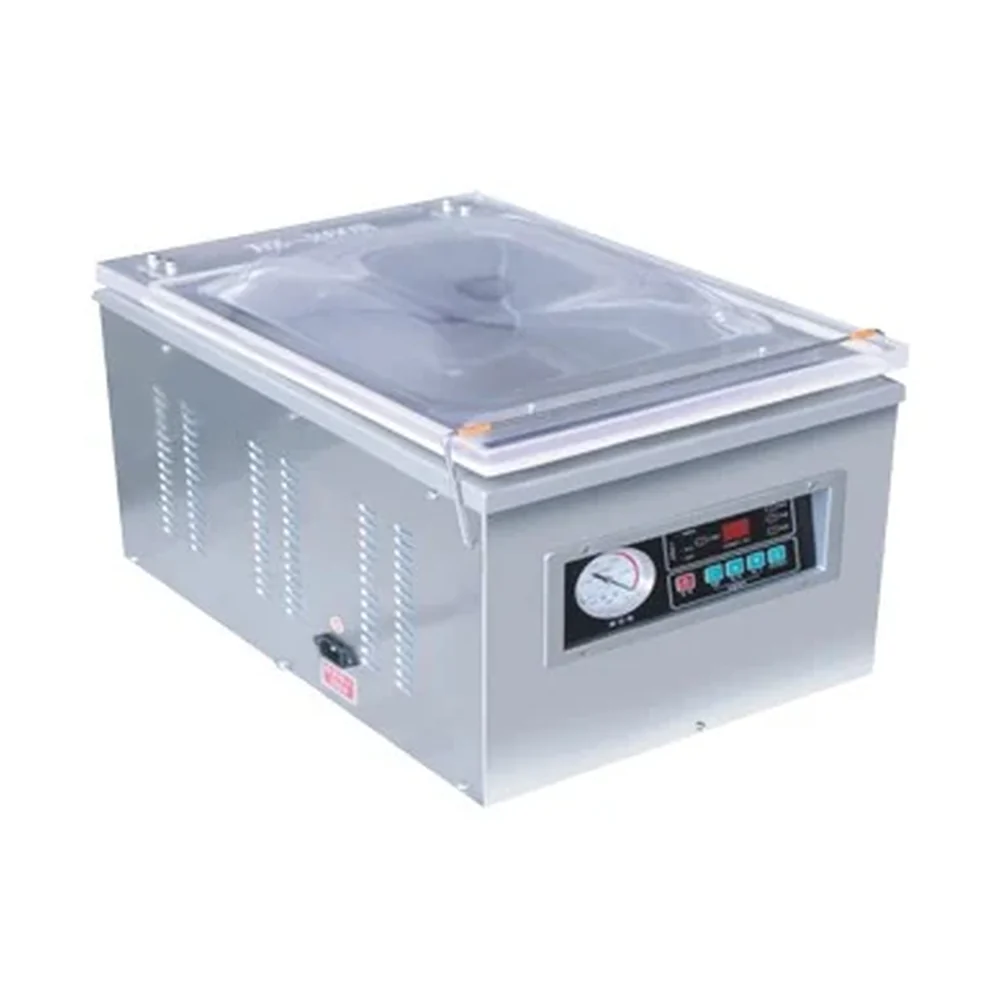
horizontal vacuum packaging machine for seafood and fresh food
How to Choose a Horizontal Flow Wrapping Machine
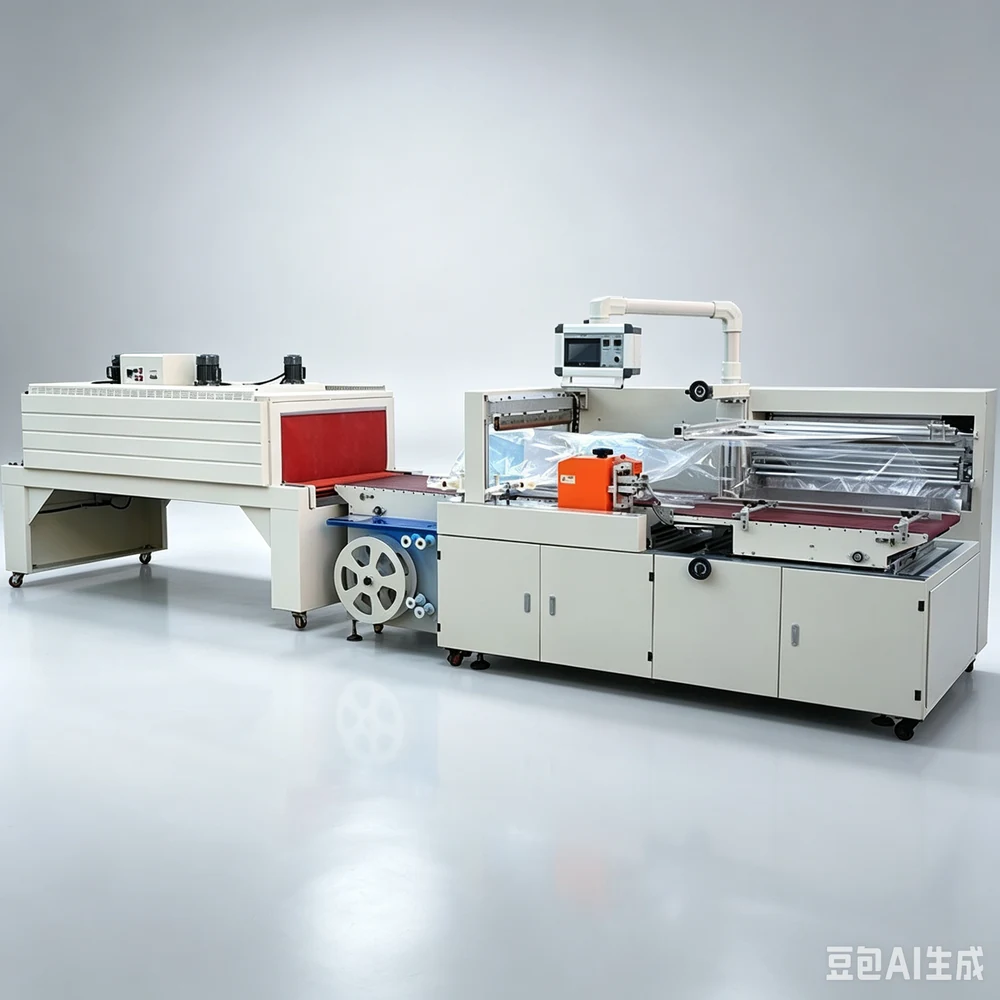
Start with product length, width, height, shape and orientation, then confirm bag style, film type and width, bag length, feeding method, required output, sealing needs and available line layout.
Horizontal Flow Wrapping Applications
Use verified products for bread, toast, biscuits, bakery items, fruit, vegetables, hardware, tools and auto parts. Match each application to a real product page or case.
Key Technical Parameters to Confirm
Confirm product size and spacing, film specification and width, bag length, sealing structure, infeed method, coding, gas flushing where verified, power and upstream/downstream interfaces. Use model sheets for numeric values.
Flow Wrapper Comparison and Selection Guide
Top-film feeding is commonly evaluated for stable products; bottom-film feeding can support soft or irregular products. Final choice must be based on sample transfer, film path, package geometry and the selected model.
Production Line Integration
Define manual or automatic feeding, product spacing, conveyors, coding, optional gas supply and downstream collection. Exchange interface dimensions and control signals before final configuration.
Horizontal Flow Wrapping Projects and Cases
Use verified Uzbekistan, Kyrgyzstan and Azerbaijan bread projects to show application fit. Do not generalize bread case results to vegetables or industrial parts.
Horizontal Flow Wrapper FAQ
The answers below support pre-sale selection and do not replace product trials or final engineering confirmation.
What is the difference between top-film and bottom-film flow wrapping?
The film path and product support differ. Top-film feeding is often assessed for stable products, while bottom-film feeding can support soft or irregular products. Confirm with samples and the selected model.
Which products can a horizontal flow wrapper package?
Verified examples include bread, toast, biscuits, bakery items, selected fruit and vegetables, hardware, tools and auto parts. Size, shape, orientation and feeding must still be confirmed.
What information is needed to select a flow wrapper?
Provide product photos or samples, dimensions, shape and orientation, target bag, film specification, required output, feeding method, utilities and line layout.
Can one machine handle different product sizes?
The adjustment range, film and any change parts depend on the selected model. Confirm every required format against model data and samples.
Can the machine add nitrogen flushing or connect to an automatic feeder?
These options are model and project dependent. Confirm the product, feeding sequence, gas requirement, film, line speed and control interface before configuration.
How should film width and bag length be confirmed?
Use product dimensions, package orientation, sealing allowance and the selected model’s verified range. Approve the final film and bag specification with a sample pack.
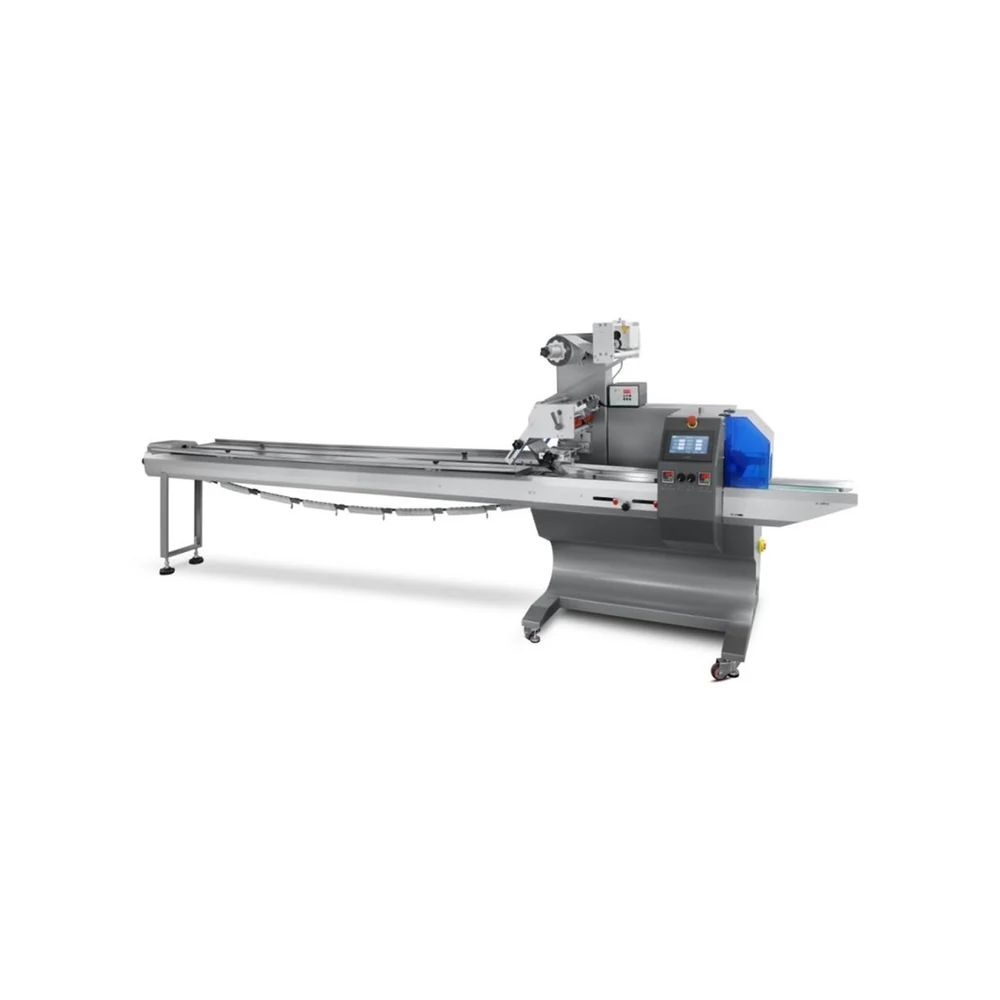
Horizontal Flow Packing Machine for Vegetables, Naan Bread and Bakery Products
Horizontal flow packing machine for vegetables, naan bread, flatbread, bakery products, hardware parts and other regular products. The verified model table covers film width, bag dimensions, product height, packing speed, power, machine size and weight.

Horizontal Flow Wrapper for Biscuits, Cookies and Small Product Packaging
Horizontal flow wrapper for biscuits, cookies and other regular small products. Six verified models list film width, sealing and bag lengths, bag width, product height, packing speed, power, machine size and weight for application-based selection.