
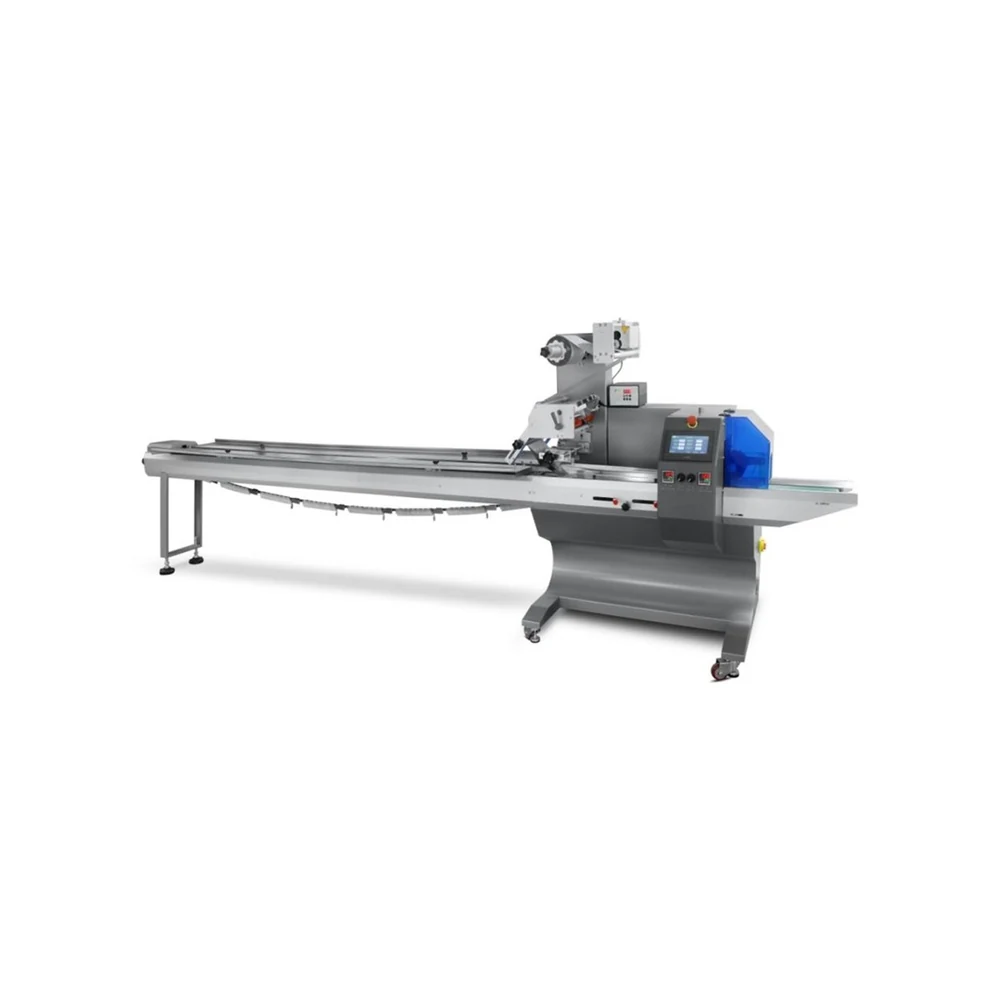
For bakeries and food factories, a horizontal flow wrapping machine is usually selected when the product needs a pillow pack style with stable sealing, good appearance and continuous output. Bread, croissants, cakes, biscuits, vegetables and tray-packed food can all use flow wrapping, but the correct model depends on product size, film width, feeding style and freshness requirements.
1. Confirm product size before choosing the model
The first step is to measure the product length, width and height after it is arranged for packing. A bread loaf, tray, croissant pack or vegetable pack may require different film width and sealing jaw size. If the product height is large, the machine needs enough forming space and stable film pulling. If the product is small, a compact model can often run faster and use less film.
For bread and bakery packaging, Longteng commonly recommends the LT-450D bread horizontal flow packing machine. For larger vegetables, trays and wider products, the LT-600D horizontal flow packing machine is often more suitable.
2. Decide whether nitrogen flushing is needed
Fresh bakery products often need better shelf life. In this case, nitrogen flushing can be added to reduce oxygen inside the package. This is especially useful for bread, cakes, croissants and similar products where freshness and package appearance matter. The final result depends on product type, film barrier performance and the sealing quality of the package.
3. Match the feeding method to your production line
Manual feeding is enough for some small factories, but medium and large production lines often require belt feeding, automatic feeding or connection with upstream equipment. Stable feeding is important because uneven spacing can cause wrong cutting position, poor sealing or wasted film. Before ordering, buyers should provide product photos, sample sizes and expected output per minute.
4. Check film type and sealing requirements
Flow wrapping machines usually work with roll film. Different products may use different film structures depending on transparency, barrier property, printing and sealing temperature. If the product needs ventilation holes, date coding or easy-tear design, these details should be confirmed before machine configuration.
Recommended information to send before quotation
- Product length, width and height
- Product photos or packaging samples
- Film material and film width if already decided
- Required packing speed
- Whether nitrogen flushing, coding or automatic feeding is needed
If you are planning a bakery or food packaging project, contact Longteng Machinery with your product dimensions. We will recommend the right horizontal flow wrapping machine and matching feeding options.
Related Flow Wrapper Series Pages
Start with bread format and handling
Record loaf dimensions, product softness, surface condition and whether the bread arrives individually or in groups. Soft or fragile products need stable support and controlled feeding to avoid compression or misalignment.
Select film direction and feeding
Top-film and bottom-film configurations support different product-handling needs. Confirm how products enter the wrapper, whether trays are used and whether manual, belt or automatic feeding is required.
Review sealing and optional atmosphere control
Film material, pack dimensions and required seal quality determine the forming and sealing setup. If gas flushing is required, define the product, film and acceptance method before confirming the machine.
Buyer checklist
- Bread samples and dimensions
- Film type and roll information
- Target packs per minute
- Feeding and upstream process
- Workshop layout and utility supply
Related machines and project evidence
Compare the relevant Longteng equipment category. For a specific machine or real application, review LT-450D bread flow packing machine.











One Response